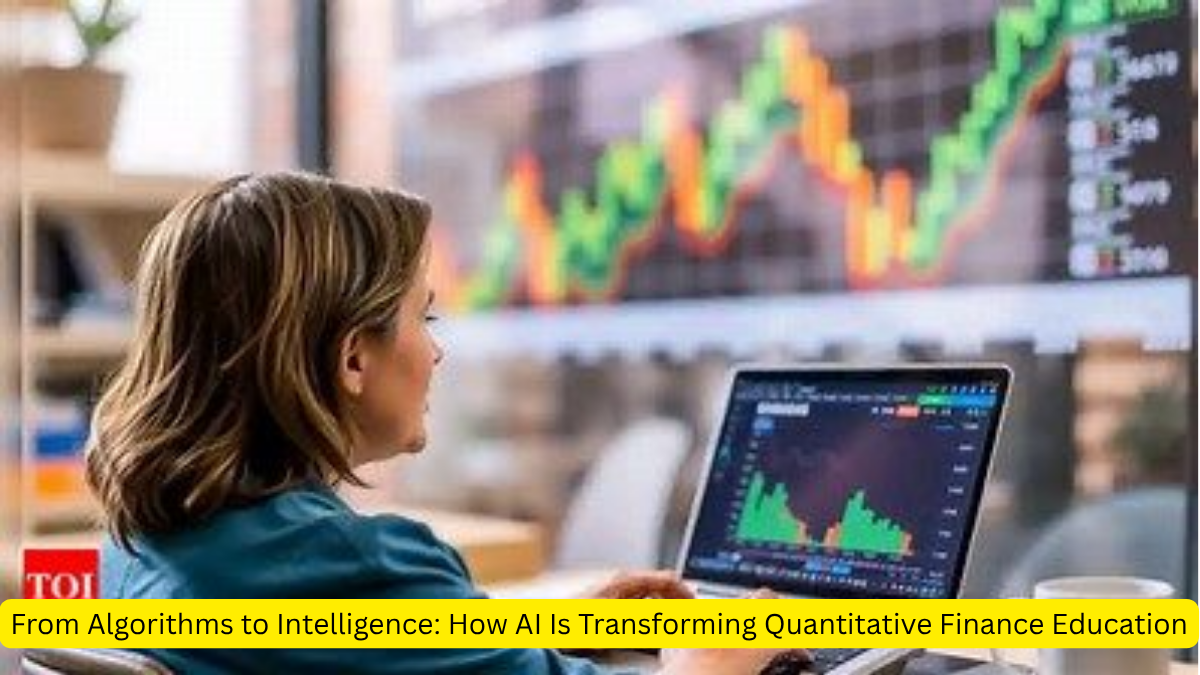
The world of quantitative finance is evolving rapidly, and artificial intelligence (AI) is at the forefront of this transformation. Traditionally, quantitative finance education focused on mathematics, statistics, and algorithmic trading. Today, AI is reshaping the curriculum, tools, and skill sets required for the next generation of finance professionals.
AI in the Curriculum
Modern programs are integrating AI into multiple aspects of quantitative finance:
- Machine Learning: Students learn predictive modeling, risk assessment, and portfolio optimization using supervised and unsupervised learning techniques.
- Natural Language Processing (NLP): Analyzing news, social media sentiment, and earnings calls helps in making data-driven trading decisions.
- Reinforcement Learning: Autonomous trading systems are now taught, allowing students to develop strategies that adapt to changing market conditions.
- Big Data and Cloud Computing: Handling large datasets is crucial, requiring familiarity with distributed systems and cloud infrastructure.
Hands-On Learning with AI Tools
AI is not just changing what students learn but also how they learn. Simulation platforms enable testing of AI-driven trading strategies in risk-free environments. Adaptive learning systems personalize study plans, identify knowledge gaps, and provide analytics to visualize complex financial data.
Preparing Future Quants
The integration of AI ensures graduates are proficient not only in coding and quantitative analysis but also in designing intelligent financial systems. Interdisciplinary training in finance, computer science, and ethics ensures students understand AI model interpretation, bias detection, and regulatory compliance.
Challenges and Opportunities
Incorporating AI into finance education poses challenges, including curriculum development, faculty training, and balancing theory with practical applications. However, the benefits far outweigh the challenges, as students gain skills that align with the demands of modern financial markets.
Conclusion
AI is fundamentally reshaping quantitative finance education, turning students from traditional quants into intelligent systems designers. By combining financial theory with AI-driven tools, the next generation of finance professionals will be equipped to navigate complex, data-driven markets with innovation and confidence.